
There’s something about that fruity smoke flavor that makes this jerky taste way more complex than the stuff you grab at gas stations.
Applewood smoked jerky is worth the extra effort if you want meat that tastes like it came from a legit smokehouse!
You need to slice your beef really thin and against the grain, or you’ll end up chewing each piece for five minutes.
I use a marinade with soy sauce, brown sugar, and worcestershire that complements the sweet applewood smoke perfectly.
The smoking process takes a few hours but requires almost zero actual work!
How to Make Applewood Smoked Jerky Recipe
Ingredients
- 2 lb Lean Beef (Top Round)
- 1.5 cups Applewood Chips
- 3/4 cup Soy Sauce
- 1/4 cup Worcestershire Sauce
- 2 tbsp Brown Sugar
- 1 tsp Onion Powder
- 1 tsp Garlic Powder
- 1 tsp Smoked Paprika
- 2 tsp Black Pepper
- 1 tbsp Apple Cider Vinegar
Step-by-Step Instructions
Step 1:
Stick the beef in the freezer for about an hour so it’s easier to slice cleanly.
Trim off all visible fat, then slice the beef into 1/4-inch strips across the grain for that classic jerky chew.
Step 2:
Whisk together soy sauce, Worcestershire, vinegar, and brown sugar until the sugar dissolves.
Add onion powder, garlic powder, smoked paprika, and black pepper, mixing until it’s all blended.
Step 3:
Drop the beef strips into the marinade and make sure every piece gets coated.
Cover and refrigerate for 12 hours, flipping the strips once halfway through.
Step 4:
Pat the beef dry with paper towels before it hits the smoker.
Arrange the strips on smoker racks, leaving a little space between each piece.
Step 5:
Set your smoker to 165°F and toss in the applewood chips once the heat’s steady.
Smoke the jerky for 4 to 6 hours; look for strips that bend without snapping.
Step 6:
Let the jerky cool at room temp for about 30 minutes before storing.
Portion it into airtight bags or containers for snacking or storage.
Tips and Tricks for Making This Recipe
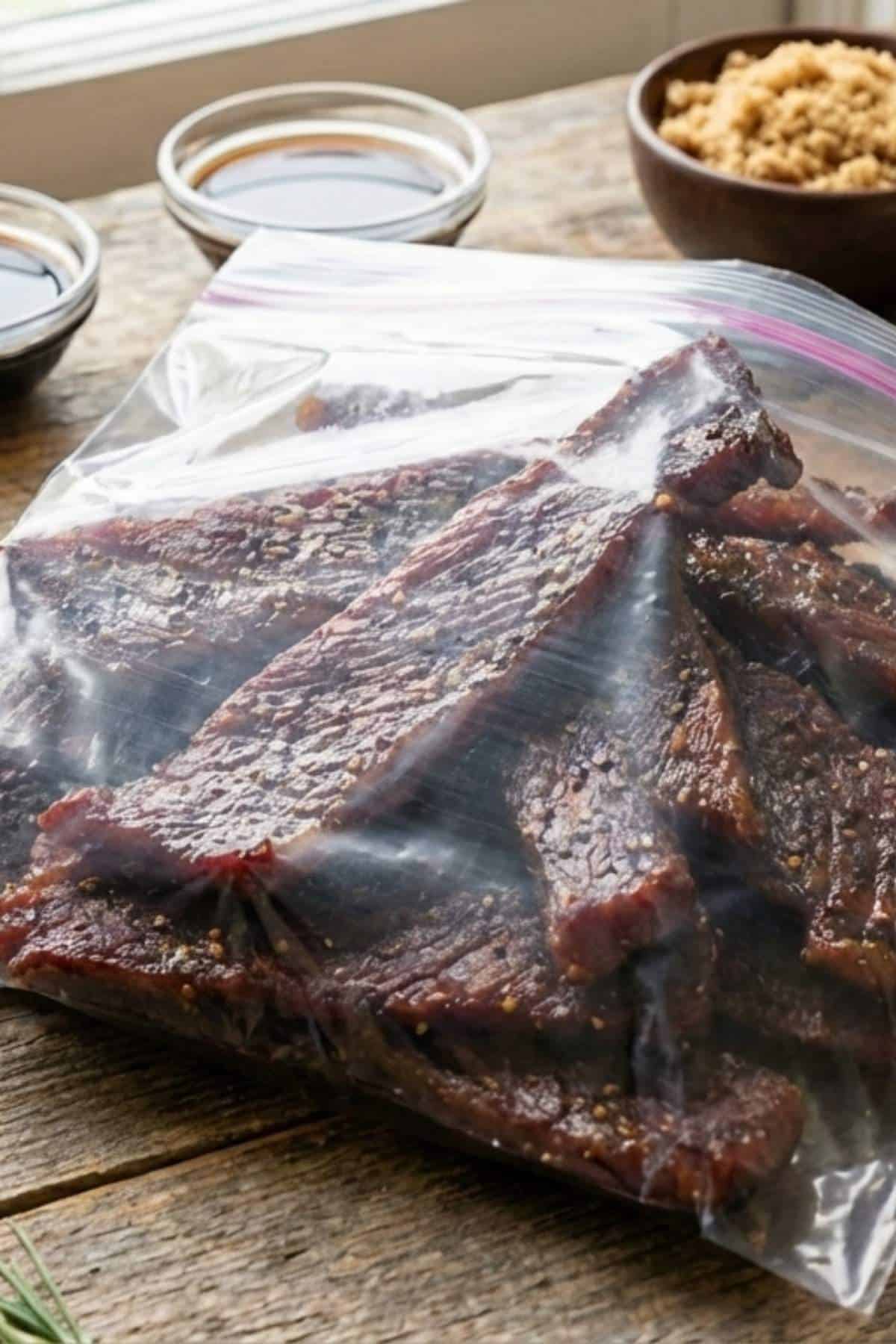
Slice Consistency
Keep the strip thickness as uniform as you can; uneven slices just dry weirdly and mess with the texture.
Smoke Control
Go light and steady on the smoke.
Too much applewood gets overwhelming after a few hours, trust me.
Rack Spacing
Leave gaps between the strips so heat and smoke can do their thing on every side.
Texture Check
Start checking the jerky at the four-hour mark.
Humidity and strip thickness really change how long it takes.
Storage Know-How
Refrigerate jerky you’ll eat within two weeks, and freeze the rest if you want to keep it tasting fresh longer.
What to Serve with Applewood Smoked Jerky Recipe
Classic Coleslaw
Pairing applewood smoked jerky with classic coleslaw gives you a crisp, cool contrast that balances the smoky meat.
Keep the dressing light and tangy; too much sweetness just covers up that applewood flavor you worked for.
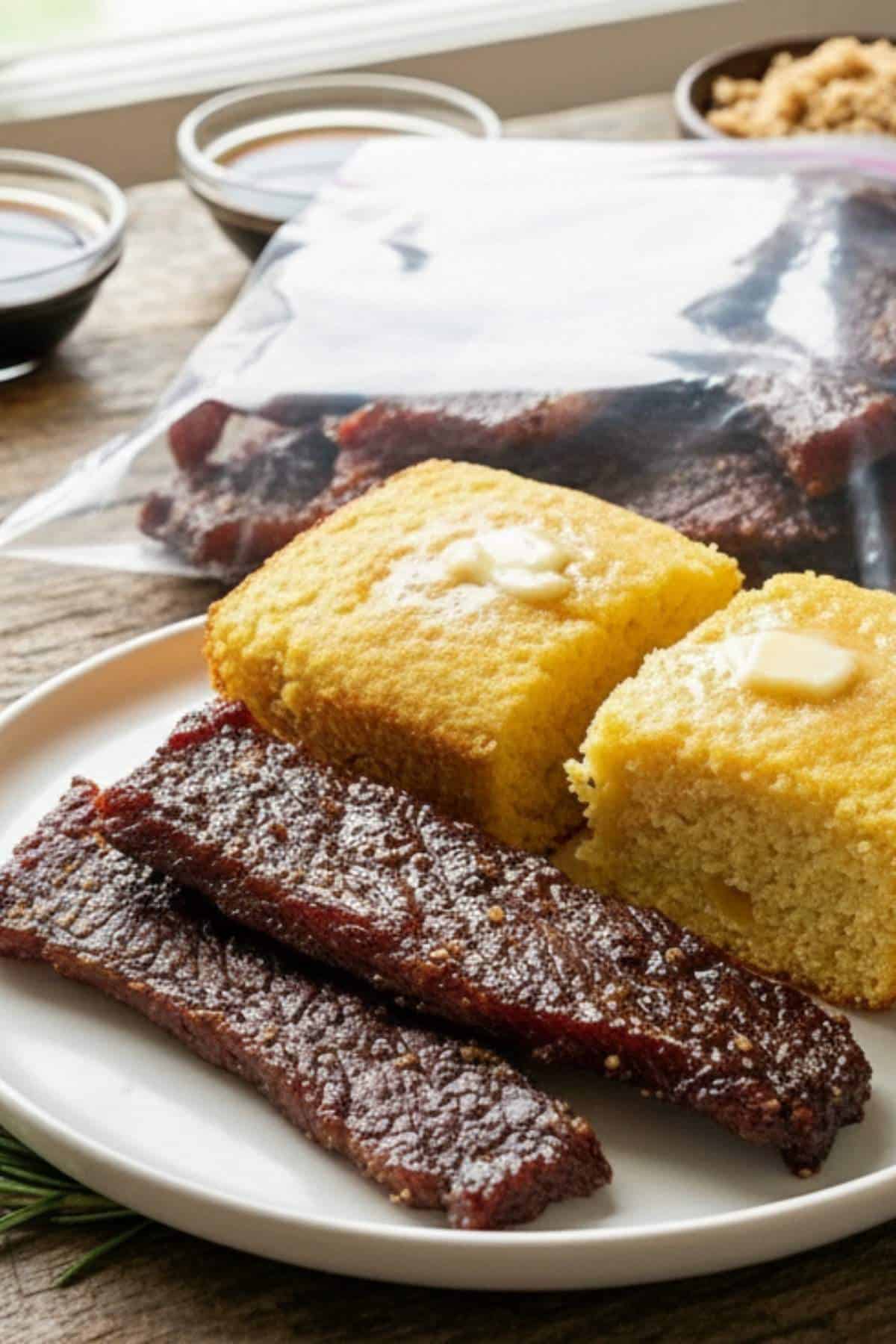
Skillet Cornbread
Cornbread just works with jerky. It’s familiar, soaks up those savory juices, and doesn’t steal the show.
Bake it in a cast iron skillet if you can; the crispy edges and soft center are unbeatable.
Pickled Watermelon Rind
Pickled watermelon rind might sound odd, but it’s sharp and refreshing, cutting through the chewiness of jerky in a way that surprises most folks.
Don’t knock it till you try it; the acidity resets your palate for the next bite.
Dark Chocolate with Sea Salt
Dark chocolate with a little sea salt is a sleeper hit next to applewood smoked jerky, especially if you’re putting together a snack board.
Go for chocolate with some bitterness; the smoke and salt really tie it all together.
Chilled Cucumber Soup
Chilled cucumber soup brings a cool, savory note that’s perfect for warm-weather snacking.
Keep it simple; just yogurt, herbs, and garlic; so the jerky stays the star.
Variations and Substitutions
Swap in venison or elk if you want leaner, firmer jerky.
I do this sometimes when I’m after a different texture.
For poultry or pork, slice extra thin and keep an eye on drying; moisture likes to hang around in those meats.
Marinade Tweaks
Try honey or maple syrup instead of brown sugar if you want a different sweetness.
I usually cut back the soy sauce a bit to keep it from getting too salty.
For lower sodium, coconut aminos work well; just add a splash of apple cider vinegar for a little brightness.
Smoking and Drying Methods
No smoker? Use an oven or dehydrator.
A drop or two of applewood liquid smoke can help, but go easy on it.
Adjust the heat with black pepper or chili flakes.
I like to add spices gradually and test with small batches first.
How to Store Leftover Applewood Smoked Jerky
Short-Term Storage at Room Temperature
If you’ll finish the jerky in two weeks, stash it in a paper or zip bag somewhere cool and dry.
Squeeze out extra air and keep it away from light and moisture; those kill freshness fast.
Medium-Term Storage for Better Freshness
For up to two months, go with an airtight jar or container to keep out oxygen.
Mason jars are my go-to; they seal tight and keep the texture right even if you open them a lot.
Long-Term Storage Options
Want it to last the longest? Vacuum seal the jerky and stick it in the fridge or freezer.
Vacuum sealing really helps hold in moisture and flavor for months; less fuss, more flavor.
Common Mistakes to Avoid
I see these mistakes all the time; skip them and your jerky will turn out smoky, chewy, and just right.
Skipping Proper Trimming
Leaving fat on the beef leads to uneven drying and weird flavors.
Trim aggressively before slicing; it makes a big difference.
Smoking Too Hot
If you crank up the smoker too high, the outside dries way too fast and you lose that bendy, flexible jerky texture everyone wants.
Overcrowding the Racks
Pack those strips too tight, and smoke just can’t get everywhere it needs to go.
I’ve seen it; some pieces come out looking weird, with blotchy color and textures all over the place!
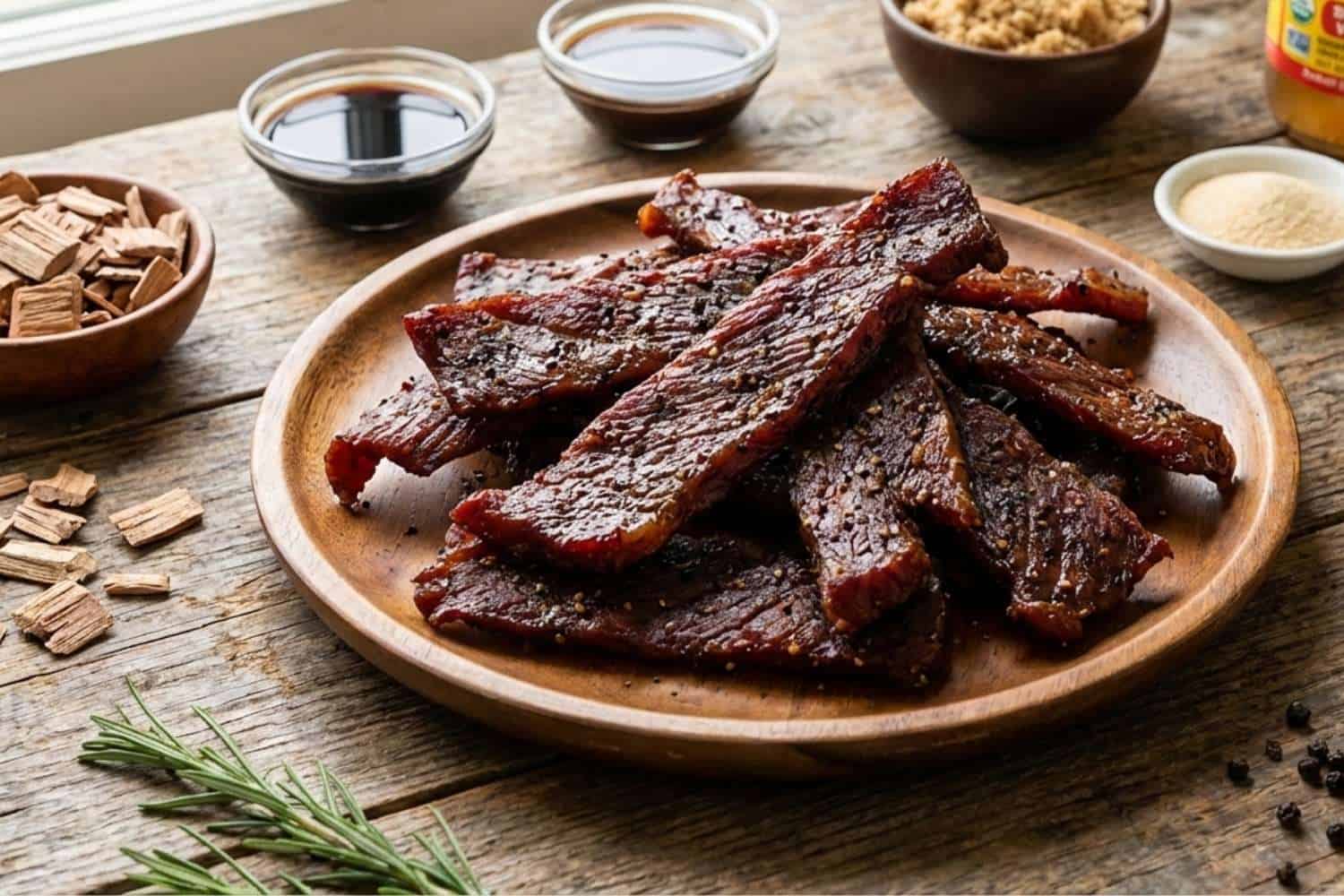
Applewood Smoked Jerky Recipe
Ingredients
- 2 lb Lean Beef Top Round
- 1.5 cups Applewood Chips
- 3/4 cup Soy Sauce
- 1/4 cup Worcestershire Sauce
- 2 tbsp Brown Sugar
- 1 tsp Onion Powder
- 1 tsp Garlic Powder
- 1 tsp Smoked Paprika
- 2 tsp Black Pepper
- 1 tbsp Apple Cider Vinegar
Instructions
- Stick the beef in the freezer for about an hour so it’s easier to slice cleanly.
- Trim off all visible fat, then slice the beef into 1/4-inch strips across the grain for that classic jerky chew.
- Whisk together soy sauce, Worcestershire, vinegar, and brown sugar until the sugar dissolves.
- Add onion powder, garlic powder, smoked paprika, and black pepper, mixing until it’s all blended.
- Drop the beef strips into the marinade and make sure every piece gets coated.
- Cover and refrigerate for 12 hours, flipping the strips once halfway through.
- Pat the beef dry with paper towels before it hits the smoker.
- Arrange the strips on smoker racks, leaving a little space between each piece.
- Set your smoker to 165°F and toss in the applewood chips once the heat’s steady.
- Smoke the jerky for 4 to 6 hours; look for strips that bend without snapping.
- Let the jerky cool at room temp for about 30 minutes before storing.
- Portion it into airtight bags or containers for snacking or storage.