
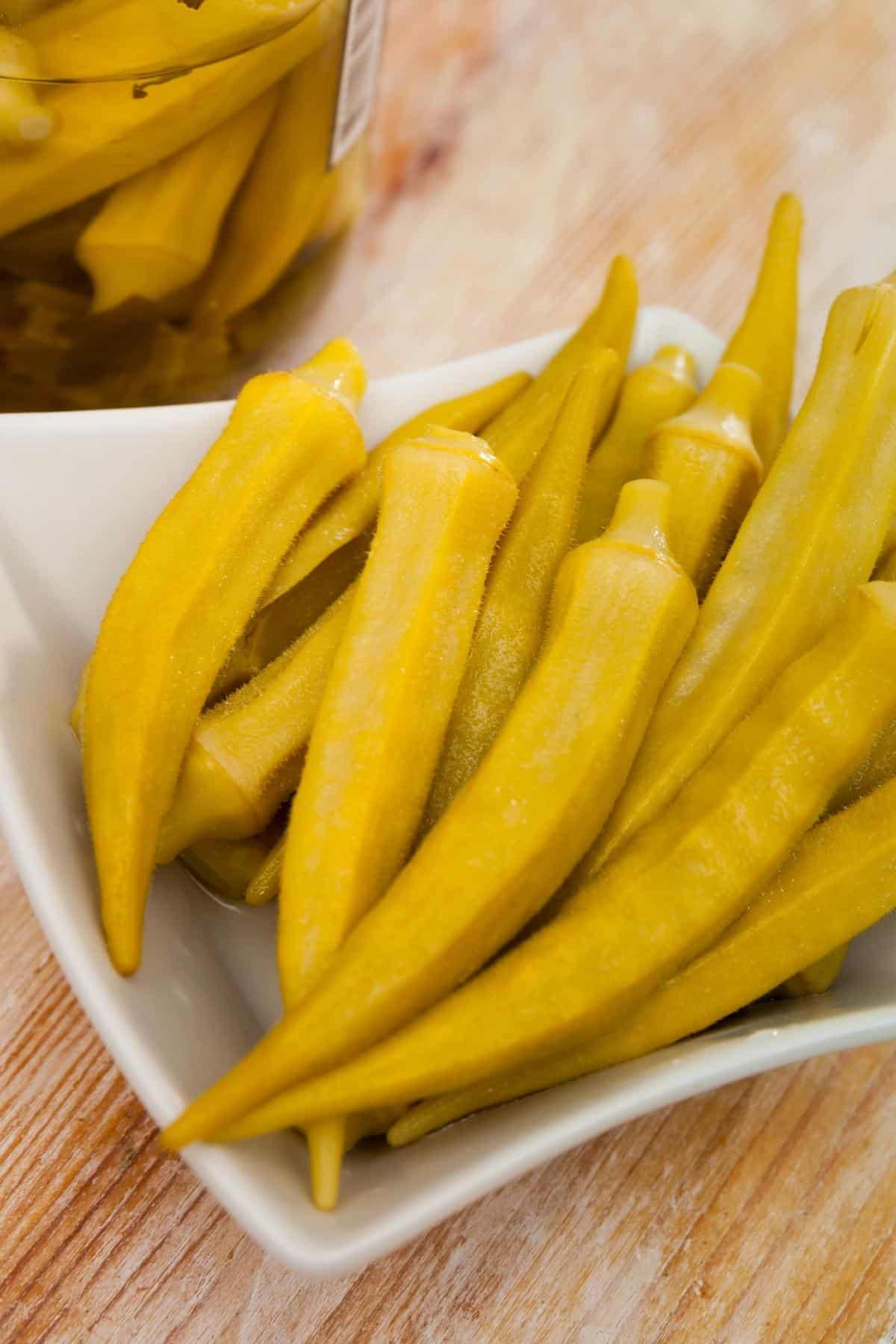
Pickled okra has that perfect balance of tangy crunch and mild veggie flavor that makes it kinda addictive (in my book!).
I love how the pickling process keeps the pods firm and crisp without any of that slimy texture.
They’re easy to make with vinegar, garlic, dill, and a good hit of heat from fresh peppers.
The trick is packing them tightly into jars so they stay submerged and soak up all that briny goodness!
You can serve them as a snack, toss them into Bloody Marys, or add them to charcuterie boards!
How to Make Pickled Okra Recipe
Ingredients
- 2 lb Okra (fresh, 2.5–4 inches)
- 2 cups Vinegar (5% acidity)
- 2 cups Water
- 2 tbsp Pickling Salt
- 6 cloves Garlic (halved)
- 6 each Dried Red Chile Peppers
- 1 tsp Calcium Chloride (Pickle Crisp)
Step-by-Step Instructions
Step 1:
Wash the okra under cool water, trim only the stem tips, and keep the pods whole to limit moisture release.
Step 2:
Sterilize pint jars in boiling water for 10 minutes, then keep them hot until filling time.
Step 3:
Heat vinegar, water, and pickling salt in a saucepan until it reaches a steady boil.
Step 4:
Add garlic, chile peppers, and a small pinch of calcium chloride to each hot jar.
Step 5:
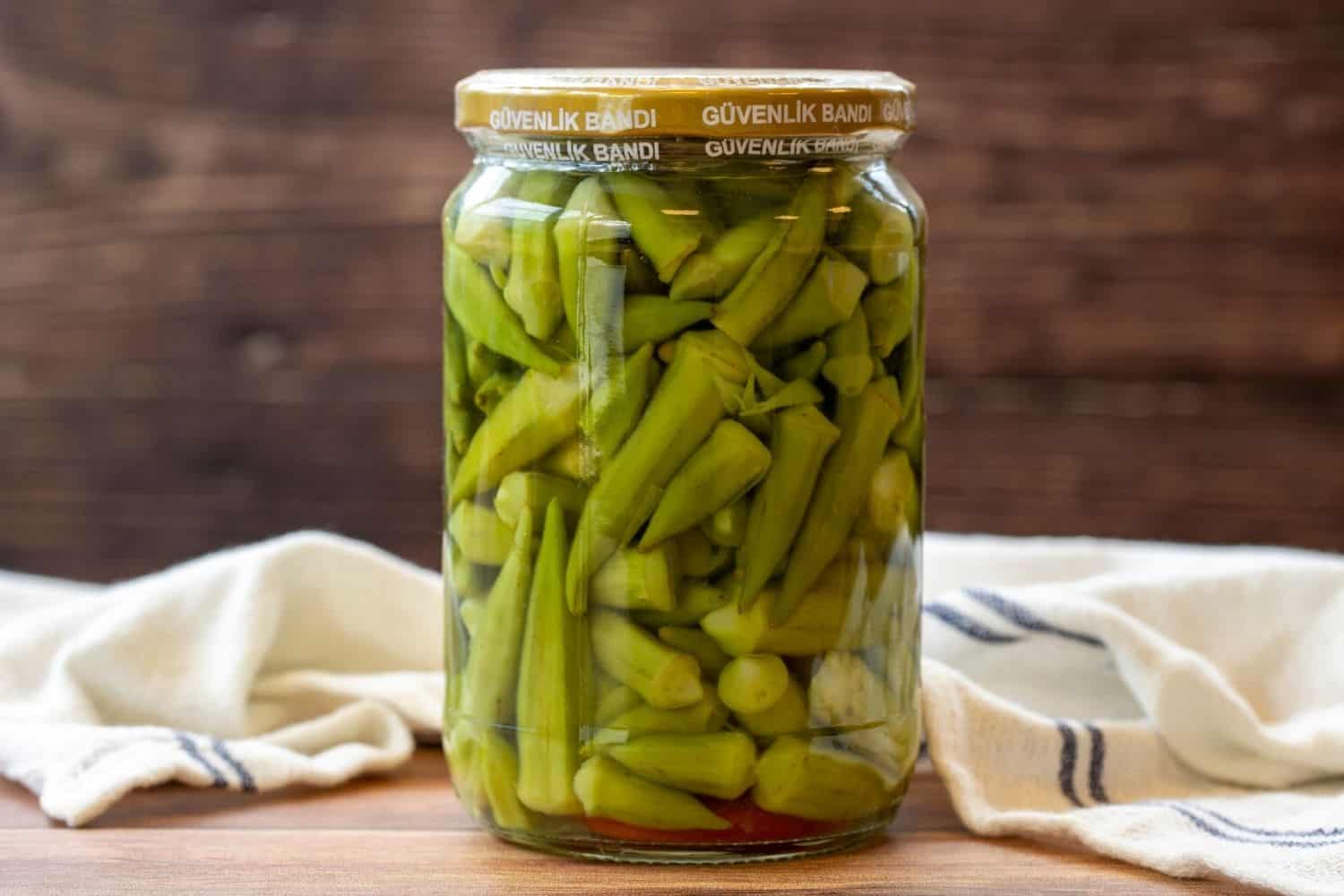
Pack okra tightly into jars, alternating tip directions so the pods fit snugly.
Step 6:
Pour hot brine over the okra, leaving 1/4 inch headspace, then remove air bubbles and seal jars fingertip tight.
Step 7:
Process jars in a boiling water bath for 10 minutes, then cool undisturbed for 12 hours.
Tips and Tricks for Making This Recipe
Choose the Right Okra
You want young, firm okra because older pods turn woody and soften too much during storage.
I learned that lesson the hard way.
Keep the Pods Whole
I always leave okra intact; slicing releases juices that make for a slippery mess inside the jar.
Balance the Vinegar
Blending white and apple cider vinegar works, but make sure the total acidity stays at 5 percent for safe storage.
Pack with Purpose
Pack jars firmly but don’t crush the pods.
Tight packing helps limit floating and keeps the brine even.
Let Time Do Its Work
You’ll get better flavor after a week or so; I never rush this resting period anymore!
What to Serve with Pickled Okra Recipe
Deviled Eggs
I like serving deviled eggs because you get creamy richness, and pickled okra cuts through that with clean acidity.
Pimento Cheese and Crackers
I often set out pimento cheese with simple crackers.
Alternate bites and enjoy how the sharp cheese contrasts with the briny crunch.
Buttermilk Mashed Potatoes
You might not expect this pairing, but smooth mashed potatoes balance the vinegar bite and make meals feel grounded.
Roasted Sweet Potatoes with Smoked Paprika
Roasted sweet potatoes with a light spice rub give gentle sweetness that plays nicely with okra’s tang.
Citrus and Fennel Salad
Sometimes I serve a citrus and fennel salad.
The fresh citrus oils keep the plate feeling bright and refreshing.
Hummus with Warm Flatbread
I enjoy hummus and flatbread with pickled okra; scoop, crunch, mix textures, and just relax at the table.
Fried Chicken
Growing up, I ate pickled okra with fried chicken.
The vinegar notes really cut through crisp breading beautifully.
Variations and Substitutions
Spice Options
Add dried chilies, red pepper flakes, or a sliced jalapeño for extra zip.
I do this often when I want more heat!
Vinegar Choices
You can swap apple cider vinegar with white wine or distilled vinegar.
Just stick with five percent acidity for balance.
Sweetness Tweaks
Add a little sugar (or a substitude), or honey if you want contrast, though I usually keep it minimal.
Vegetable Swaps
This brine works for green beans or small cucumbers too.
I’ve tried it when okra season ends.
Texture Helpers
Add pickle crisp granules or grape leaves if you want firmer pods.
I rely on them sometimes.
Jar Adjustments
Taller jars fit longer pods, but keep the okra uncut to avoid slime.
How to Store Leftover Pickled Okra Recipe
After years of making this pickled okra, I’ve realized that smart storage keeps your jars crisp and bright every time.
Refrigerator Storage
Refrigerate opened jars promptly; cold temps slow spoilage and help the okra stay firm longer.
Keep the okra fully submerged in brine to protect flavor and prevent surface problems.
Pantry Storage
Store unopened jars in a cool, dark pantry where temps stay steady and light is minimal.
I label every jar with the packing date so you can rotate older batches forward. Saves guessing later.
Food Safety Tips
Once opened, use refrigerated pickled okra within about two months for best crunch.
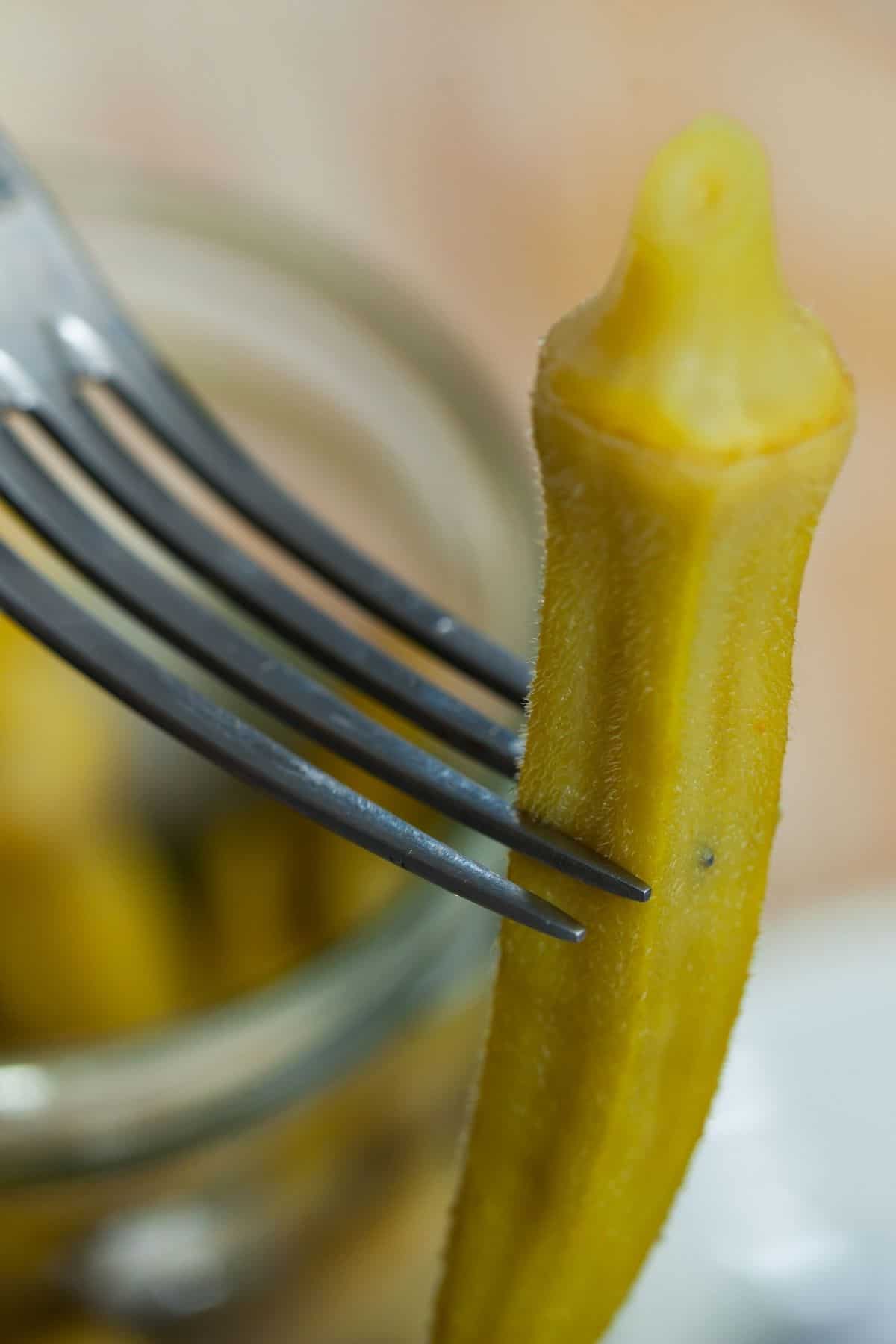
I always use clean forks or tongs; little habits like this really cut down on contamination risks.
Common Mistakes to Avoid
Using Large or Old Okra
You might grab large or aging pods, but small, firm okra stays crisp!
Pick pods around three to four inches to avoid slime during pickling.
Pouring Hot Brine
If you feel rushed, remember hot brine softens okra fast and ruins texture.
Let the brine cool before pouring.
That keeps your jars crunchy and tasting clean every time.
Poor Jar Packing and Prep
Maybe some folks skip jar prep, but I always wash and sterilize.
It just feels safer; spoilage is not worth the risk.
Packing jars too tightly? That’s a classic mistake.
It stops the brine from moving around, so the flavor ends up all over the place.
Pickled Okra Recipe
Ingredients
- 2 lb Okra fresh, 2.5–4 inches
- 2 cups Vinegar 5% acidity
- 2 cups Water
- 2 tbsp Pickling Salt
- 6 cloves Garlic halved
- 6 each Dried Red Chile Peppers
- 1 tsp Calcium Chloride Pickle Crisp
Instructions
- Wash the okra under cool water, trim only the stem tips, and keep the pods whole to limit moisture release.
- Sterilize pint jars in boiling water for 10 minutes, then keep them hot until filling time.
- Heat vinegar, water, and pickling salt in a saucepan until it reaches a steady boil.
- Add garlic, chile peppers, and a small pinch of calcium chloride to each hot jar.
- Pack okra tightly into jars, alternating tip directions so the pods fit snugly.
- Pour hot brine over the okra, leaving 1/4 inch headspace, then remove air bubbles and seal jars fingertip tight.
- Process jars in a boiling water bath for 10 minutes, then cool undisturbed for 12 hours.