
If you’re a fan of bold and flavorful dishes, you’ll love Emeril Lagasse’s blackened catfish recipe!
This dish captures the essence of Cajun cuisine with its rich, spicy coating.
To achieve the perfect crust, make sure your skillet is preheated to a high temperature before adding the seasonings.
I usually serve it with a side of lemon butter sauce, which adds a refreshing balance to the spiciness. Much Yum!
How to Make Emeril Lagasse Blackened Catfish Recipe
Ingredients
- 4 Catfish Fillets
- 2 tbsp Paprika
- 1 tsp Salt
- 1 tsp Garlic Powder
- 1 tsp Onion Powder
- 1 tsp Cayenne Pepper
- 1 tsp Black Pepper
- 1 tsp Thyme (dried)
- 1 tsp Oregano (dried)
- 4 tbsp Butter (melted)
Step-by-Step Instructions
Step 1:
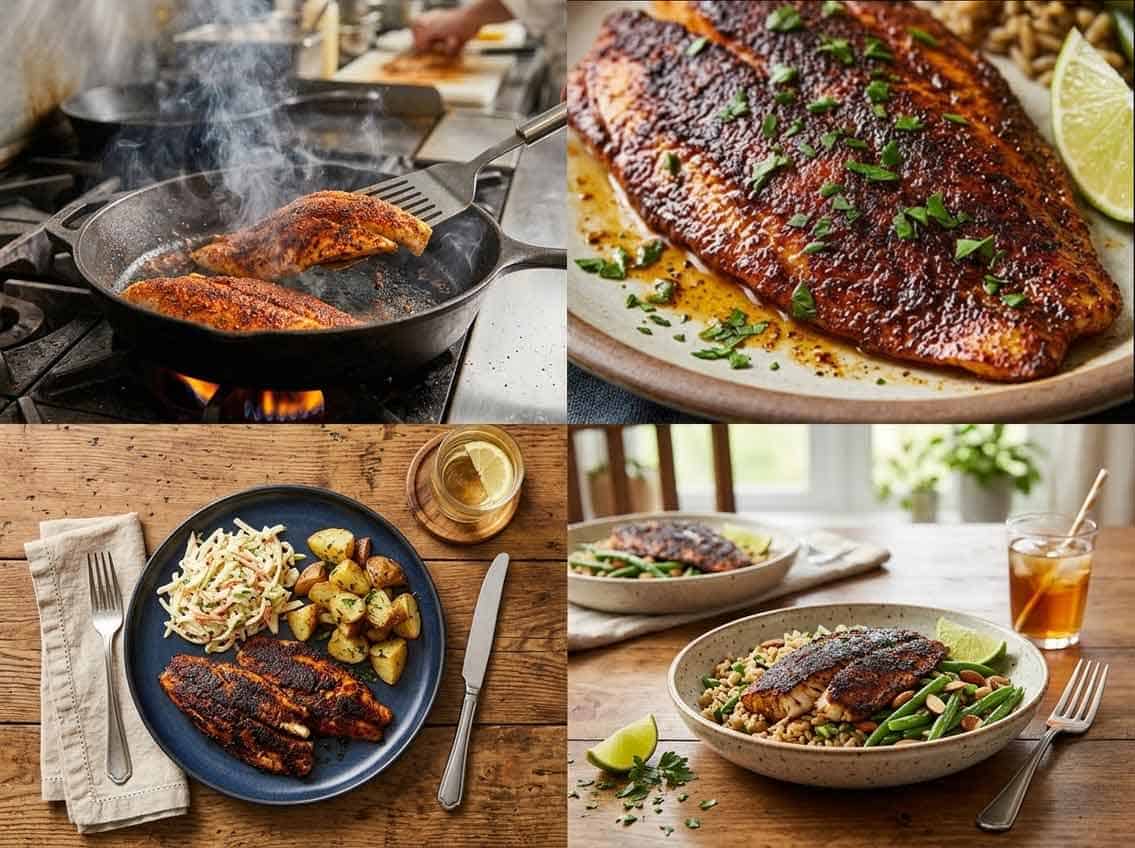
Preheat a large cast-iron skillet over high heat until it’s very hot, around 10 minutes.
Step 2:
Pat the catfish fillets dry using paper towels to help the seasoning stick better.
Step 3:
Mix together the paprika, salt, garlic powder, onion powder, cayenne, black pepper, thyme, and oregano in a small bowl.
Step 4:
Brush each fillet with melted butter, then coat both sides evenly with the spice mixture.
Step 5:
Cook the seasoned fish in the hot skillet for about 2-3 minutes on each side, until a flavorful crust forms.
Common Mistakes to Avoid
Why Did My Crust Turn Pale Instead of Dark
Your cast-iron skillet wasn’t hot enough, and that’s the issue nine times out of ten.
Emeril Lagasse’s blackening method demands a screaming-hot pan preheated for a full 10 minutes over high heat.
If the crust looks grayish or pale, the fish steamed instead of seared, so trust that preheat time!
Why Did My Catfish Taste Muddy or Too Strong
I always soak my catfish fillets in buttermilk for 30 minutes before cooking.
This draws out that swampy, off-putting flavor that farm-raised catfish can sometimes carry.
Rinse them well, pat dry, and you’ll notice a much cleaner taste once the spice crust is on.
Using Wet Fillets Before Seasoning
Moisture on the surface creates a barrier between the spice blend and the flesh.
I make sure to press paper towels firmly on both sides of each fillet until they’re completely dry.
Dry fillets grab onto that seasoning and build a crust that rivals Emeril Lagasse’s signature char!
Skipping the Rest After Seasoning
I’ll usually let my coated fillets sit for about five minutes before they hit the skillet.
This short rest lets the butter and spices meld into the surface for a coating that won’t slide off mid-sear.
Why Did My Spice Coating Taste Burnt and Bitter
If you smell acrid smoke and see the spices turning jet-black within seconds, your heat is too aggressive.
I’ve experimented with reducing to medium-high right after the fillet goes in, and that prevents the paprika and garlic powder from scorching.
You can absolutely recover by scraping the pan between batches!
Crowding the Skillet During Searing
Placing too many fillets in at once drops the pan temperature fast and produces steam instead of a sear.
I cook no more than two fillets at a time in a 12-inch skillet to keep that Emeril Lagasse-style blackened crust intact.
Why Did My Fish Break Apart When Flipped
Catfish is delicate, and flipping too early before the crust sets is the problem.
Wait until you see the edges turn opaque and the fillet releases naturally from the pan, usually around two to three minutes.
A thin fish spatula slid gently underneath makes this so much easier!
Tips and Tricks for Making This Recipe

Use a Hot Skillet
Make sure the skillet is preheated well over high heat to achieve that authentic blackened crust on the catfish.
Keep the Fillets Dry
Patting the fillets dry before seasoning prevents steam, ensuring a crispier finish on the outside of the fish.
Don’t Skimp on Butter
Using a generous amount of butter not only helps with flavor but also contributes to the crust’s richness and texture.
Ventilation Matters
This recipe can get smoky, so be ready with good ventilation or open windows while the catfish cooks.
Experiment with Seasoning
Feel free to adjust the spice levels to your liking by adding more cayenne for heat or more herbs for a fragrant touch.
What to Serve with Emeril Lagasse Blackened Catfish Recipe
Collard Greens with Bacon
You can add a touch of the South to your table with collard greens slow-cooked with bacon.
This hearty combination complements the spiced fish with an earthy richness.
Hush Puppies
Crispy hush puppies are a classic side that pairs well with blackened catfish.
Their golden, fried texture is a pleasing contrast to the spices of the fish.
Grilled Vegetables
If you’re looking for something fresh and vibrant, grilled vegetables can be an excellent choice.
Their smoky, charred flavor can add a nice depth to your plate.
Cucumber Salad
A cool cucumber salad can act as a refreshing palate cleanser.
The crisp and clean flavors offer a refreshing bite among all the spices.
Mashed Sweet Potatoes
For something unexpected yet satisfying, mashed sweet potatoes are a delicious choice.
The sweet and savory notes create a harmony with the bold fish flavors.
Black Rice and Beans
Another unique option is a side of black rice and beans, rich with distinctive texture and taste.
This pairing delivers a flavorful punch that goes hand-in-hand with blackened catfish.
Grilled Corn on the Cob
Lastly, consider the simple joy of grilled corn on the cob.
With a touch of smokiness, it aligns perfectly with the blackened seasoning.
These various sides will ensure your meal is dynamic and enjoyable!
Variations and Substitutions
Alternative Fish Choices
You’re not stuck with just catfish for this recipe.
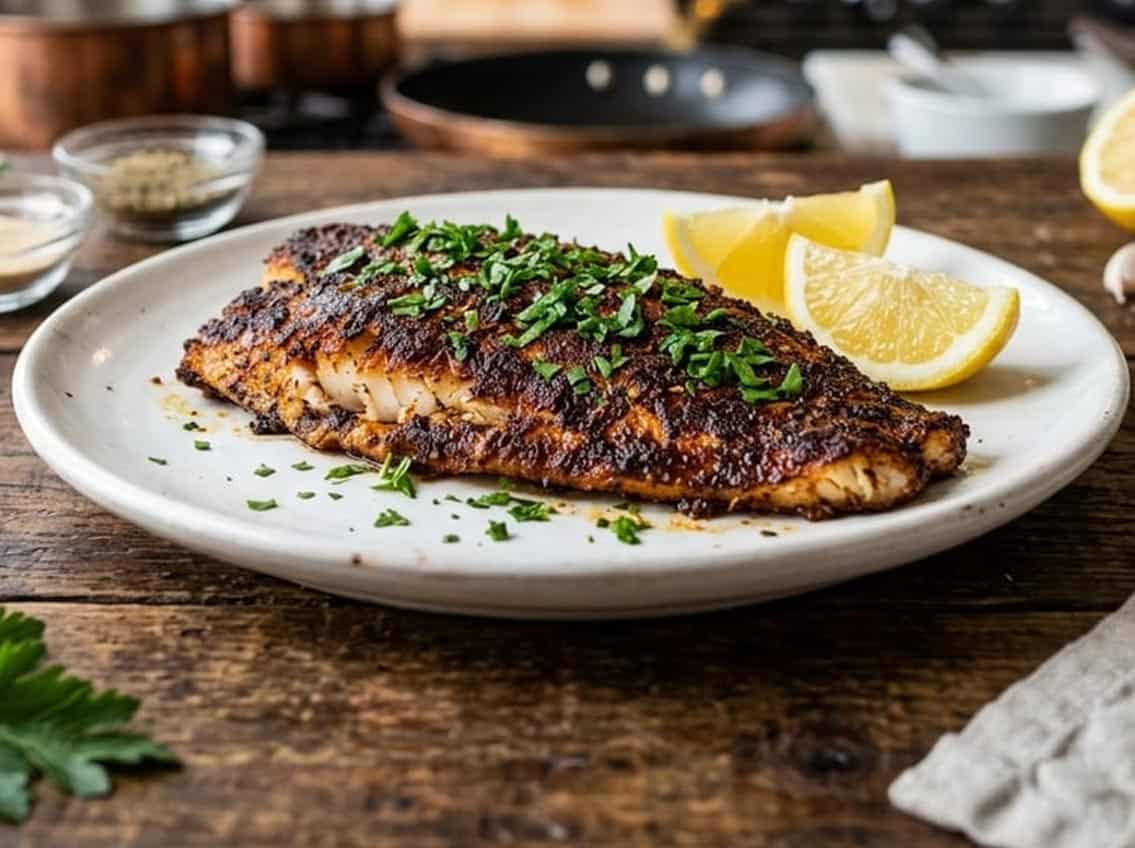
Consider trying tilapia or cod, both of which take well to blackening spices and absorb flavors beautifully.
This can refresh your dish and offer new taste experiences.
Spice Mix Adjustments
Feel free to adjust the spice blend to your liking.
Add extra cayenne if you like a bit more heat, or swap it out for a milder chili powder if you’re planning for a less spicy dish.
Experiment to find the perfect balance that matches your preferences.
Butter and Oil Options
If you’re watching your butter intake, using olive oil is a fantastic alternative.
It offers a slightly different flavor that’s perfect if you’re looking to maintain that richness but wish to be a bit healthier.
You can even try a mix of both for a middle ground.
Serving Suggestions
For a Southern twist, serve it with cheesy grits, which pair wonderfully with the smoky flavors.
Another option is a fresh side of coleslaw, offering a crunchy contrast to the tender, spicy fish.
Mix and match to find your favorite side that complements your meal.
How to Store Leftover Blackened Catfish
When you have leftover blackened catfish, it’s crucial to store it properly to maintain its flavor and texture for the next meal.
Allow your cooked catfish to cool down to room temperature before storing.
This step prevents condensation from forming inside the container, which can make the fish soggy.
Airtight Container
Use an airtight container to keep your catfish fresh.
Airtight containers help prevent your fish from absorbing any odors from the fridge.
Don’t place the container near items with strong smells, as fish can be sensitive to absorbing other flavors.
Refrigeration Tips
Place your catfish in the refrigerator within two hours after cooking.
Food safety is critical, and this step ensures the fish remains in the safe temperature zone.
Keep the temperature of your fridge below 40 degrees Fahrenheit to prevent bacterial growth.
Adding Moisture
Add a small amount of broth or olive oil before sealing the container for storage.
This keeps the fish from drying out and retains its rich flavor.
Just a tablespoon is enough to maintain that juiciness you love in your blackened catfish.
A Chef’s Answers to Your Common Questions
1. Why does my blackened catfish taste under-seasoned after cooking?
I often see this happen when the spice mix isn’t pressed firmly into the fillet before it hits the skillet.
Patting the fish completely dry first is critical because moisture creates a barrier that keeps seasoning from bonding to the flesh.
Press the blend in with your fingers, don’t just dust it on!
2. Why did my crust turn grayish instead of deep black?
Your skillet wasn’t hot enough, and that’s a discouraging result after all that prep.
Emeril Lagasse’s blackening technique depends entirely on a screaming-hot cast-iron pan, preheated a full 10 minutes over high heat.
A grayish color means the fish steamed rather than seared, so trust the preheat time!
3. How do I know the crust is forming correctly without lifting the fish?
What I’ve noticed is that you’ll hear a consistent, loud sizzle the entire time the fish is down.
If that sizzle goes quiet, your pan temperature dropped, which can throw you off completely.
The fillet should release naturally from the pan when the crust is properly set!
4. Why is my spice blend burning bitter before the fish cooks through?
Typically, I’ll use fillets no thicker than half an inch so the inside cooks in the same window the crust needs.
Thicker cuts force longer cook times, and the blackening spices burn past that savory char into bitter territory.
Slice thick fillets thinner before seasoning them.
5. How do I get Emeril Lagasse’s signature smoky depth in the flavor?
My go-to method is using smoked paprika as half of the paprika portion in the spice mix.
It adds a subtle smokiness that makes the overall profile feel richer and more layered without adding heat!
6. Why does my catfish turn dry and tough every time?
I’ve noticed that overcooking by even 60 seconds dries catfish out fast, and the result is really disappointing.
Emeril Lagasse’s version cooks just 2-3 minutes per side; pull the fish the moment it flakes when gently pressed.
To bring it back, rest it briefly under foil with a small knob of butter on top!
7. Can I use a stainless steel pan instead of cast iron for this recipe?
I’ve experimented with stainless steel, and it simply doesn’t retain heat the way cast iron does under Emeril Lagasse’s high-heat method.
Stainless loses temperature the second the cold fish touches it, and you’ll end up with a muted, pale crust instead of that bold blackened finish.
Stick with cast iron, you’ve absolutely got this!

Emeril Lagasse Blackened Catfish Recipe
Ingredients
- 4 Catfish Fillets
- 2 tbsp Paprika
- 1 tsp Salt
- 1 tsp Garlic Powder
- 1 tsp Onion Powder
- 1 tsp Cayenne Pepper
- 1 tsp Black Pepper
- 1 tsp Thyme dried
- 1 tsp Oregano dried
- 4 tbsp Butter melted
Instructions
- Preheat a large cast-iron skillet over high heat until it's very hot, around 10 minutes.
- Pat the catfish fillets dry using paper towels to help the seasoning stick better.
- Mix together the paprika, salt, garlic powder, onion powder, cayenne, black pepper, thyme, and oregano in a small bowl.
- Brush each fillet with melted butter, then coat both sides evenly with the spice mixture.
- Cook the seasoned fish in the hot skillet for about 2-3 minutes on each side, until a flavorful crust forms.