
Julia Child’s French vinaigrette is proof that the simplest recipes can often be the most elegant.
It’s bright, flavorful, and so easy to make, you’ll wonder why you ever bought bottled dressing!
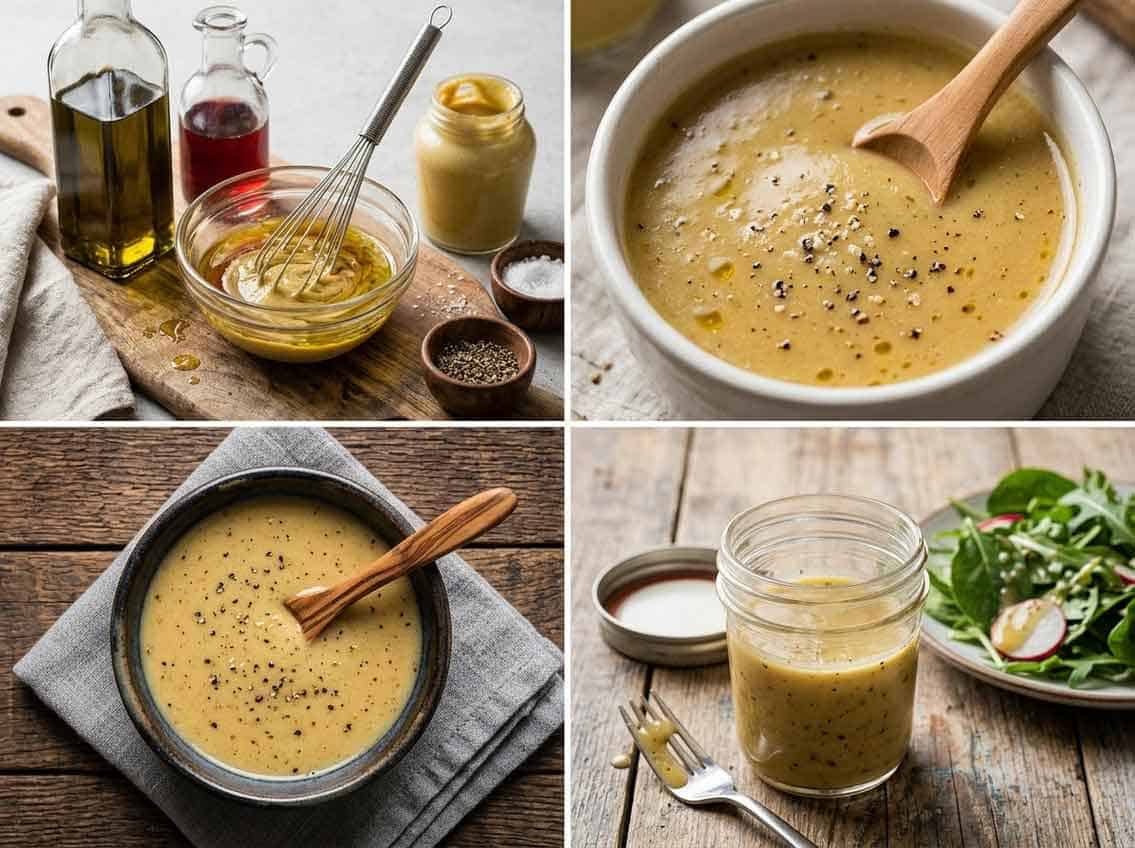
I always start by whisking the vinegar and Dijon mustard until it’s smooth. The mustard not only adds a tangy kick but also helps emulsify the dressing, keeping it silky and well-blended.
When it comes to the oil, Julia’s method encourages a mix. You can combine mild olive oil with a touch of neutral oil, like grapeseed, to avoid overpowering the vinegar.
This dressing is the definition of French simplicity—straightforward, bold, and absolutely delicious!
How to Make Julia Child’s French Vinaigrette
Ingredients
- 4 tbsp Olive Oil
- 3 tbsp Red Wine Vinegar
- 1 tsp Dijon Mustard
- Salt
- Pepper
Step-by-Step Instructions
Step 1
In a small bowl or jar, start by adding the Dijon mustard and red wine vinegar.
These ingredients will form the base of your vinaigrette.
Step 2
Next, whisk these together until the mustard is fully dissolved in the vinegar, creating a smooth mixture.
This ensures the flavors meld nicely.
Step 3
Slowly drizzle in the olive oil while continuously whisking.
This will help emulsify the dressing, giving it a uniform texture.
Step 4
Season with a good pinch of salt and a few grinds of pepper to taste.
Remember, you can always adjust this later.
Step 5
Finally, give the dressing a good shake if it’s in a jar, or continue whisking if in a bowl, to combine everything well.
Your vinaigrette is now ready for use!
Common Mistakes to Avoid
Why Did My Vinaigrette Separate So Quickly
The mustard is doing the heavy lifting as your emulsifier, so if you used too little, the oil and vinegar will split apart almost immediately.
I always use a full teaspoon of Dijon per batch, just like Julia Child’s original ratio calls for.
If it’s already broken, re-whisk it into a fresh half-teaspoon of mustard and it’ll come right back together!
Why Does the Dressing Taste Too Sharp
This usually means the vinegar is dominating because the oil wasn’t fully incorporated.
I’ve noticed that when the emulsion isn’t smooth, each bite delivers a raw vinegar punch instead of a balanced tang.
Drizzle in a bit more oil while whisking steadily, and the sharpness will mellow out.
Why Is the Texture Thick Instead of Silky
Too much mustard or whisking at high speed for too long can over-emulsify the dressing into something pasty.
My go-to method is gentle, steady whisking for about 30 seconds, no more.
You want it to flow freely off a spoon, not cling to it.
Skipping the Mustard Emulsion Base
Jumping straight to oil without first dissolving mustard into the vinegar is a common slip.
That mustard-vinegar base is what gives Julia Child’s French vinaigrette its signature creamy consistency.
Don’t skip this step or you’ll end up with an oily, disconnected dressing!
Adding the Oil Too Fast
Pouring oil in all at once will leave you with a greasy pool sitting on top of your vinegar.
I strictly avoid dumping it in and instead drizzle it slowly while whisking continuously.
A thin, steady stream is all you need for a velvety result.
Seasoning Before the Acidity Is Balanced
Salt added too early can taste harsh once the full acidity hits your palate.
I’ll usually get the oil-to-vinegar ratio right first, then season at the very end.
Taste after each small pinch so you stay in control!
Making It Too Far Ahead of Serving
Vinaigrette made hours ahead loses its bright, punchy flavor, and that’s the whole point of Julia Child’s version.
I’ve tested both ways, and I prefer whisking it fresh within 15 minutes of serving.
Your greens will thank you for the difference.
Ignoring the Oil Quality
High-quality olive oil is crucial for making the vinaigrette shine.
Using a low-quality oil could make the dressing taste flat.
Opt for extra-virgin olive oil to enhance flavor.
Tips and Tricks for Making This Recipe

Adjusting the Tanginess
Experiment with the amount of vinegar and mustard depending on how tangy you like your vinaigrette!
Storing Leftovers
Consider storing the leftover vinaigrette in a tightly closed jar in the refrigerator to keep it fresh.
Fresh Ingredients Matter
Always choose high-quality olive oil and fresh ingredients for the best results in your vinaigrette’s flavor.
Whisk vs. Shake
Feel free to use either a whisk or simply shake the jar; both methods integrate the dressing perfectly!
Taste as You Go
Tasting the vinaigrette as you add seasonings can help fine-tune the flavor to your preference!
What to Serve with Julia Child’s French Vinaigrette
Classic Green Salad
A classic option to pair with Julia Child’s French Vinaigrette is a fresh green salad.
You can use a variety of greens like romaine, arugula, or even a mixed field greens blend.
Toss in some cherry tomatoes or sliced cucumbers for extra crunch and color!
The vinaigrette ties it all together beautifully.
Grilled Vegetables
You might want to try grilled vegetables as a side.
The smoky flavor from grilled zucchini, bell peppers, and asparagus complements the zing of the vinaigrette wonderfully.
Drizzle some vinaigrette over the grilled veggies while they are warm for an added touch.
Herbed Couscous Salad
Although not traditional, consider serving an herbed couscous salad. Use fresh herbs like parsley and mint mixed with couscous, and toss it with vinaigrette. This adds a fragrant and slightly exotic twist to your meal.
Artisan Bread
Try serving an artisan bread, like a crusty baguette or ciabatta.
Slice it up and offer it with Julia’s vinaigrette as a dipping sauce.
The combination of crispy bread and the tangy vinaigrette brings a new element of taste.
Roasted Beet and Feta Salad
How about a roasted beet and feta salad?
This may not be the first thought, but beets roasted to perfection, crumbled feta, and vinaigrette make a vibrant and flavorful combination.
This adds a fantastic balance of sweet, salty, and tangy flavors to your meal.
Variations and Substitutions
Different Oils
When making Julia Child’s vinaigrette, you can switch things up by using different oils.
Try extra virgin olive oil for a rich, full-bodied flavor or grapeseed oil for a lighter touch.
Avocado oil is also a fantastic option if you prefer something with a buttery taste.
Vinegar Choices
Don’t feel limited to just wine vinegar.
Experimenting with vinegars like apple cider vinegar or balsamic vinegar can add an exciting twist to your vinaigrette.
Each type of vinegar will bring its own unique flavor profile to the dressing.
Add Some Sweetness
If you like a hint of sweetness, consider adding a small amount of honey or maple syrup.
This can balance out the acidity and enhance the flavor.
Just a teaspoon or two is usually sufficient to make a difference.
Mustard Options
You can either include or skip the mustard, depending on what you prefer.
Using Dijon mustard adds a nice tang, while whole grain mustard brings a bit of texture.
Feel free to omit it entirely if mustard isn’t your thing.
Fresh Herbs
Fresh herbs like parsley, chives, and tarragon can be added for an herbal kick.
You can also toss in a pinch of dried herbs if fresh ones aren’t available.
These herbs not only add flavor but also give the dressing a fresh, vibrant look.
How to Store Leftover Julia Child’s French Vinaigrette
Proper Container
When storing leftover Julia Child’s French Vinaigrette, you should use an airtight container.
A glass jar with a tight-fitting lid works perfectly for this.
Refrigeration
You need to refrigerate the vinaigrette to keep it fresh.
It will typically last for up to a week in the fridge.
Make sure it is not exposed to strong odors that can affect its taste.
Shake Before Use
Before you use the vinaigrette again, you need to give it a good shake.
The ingredients may have separated, and shaking helps to recombine them.

Julia Child’s French Vinaigrette
Ingredients
- 4 tbsp Olive Oil
- 3 tbsp Red Wine Vinegar
- 1 tsp Dijon Mustard
- Salt
- Pepper
Instructions
- In a small bowl or jar, start by adding the Dijon mustard and red wine vinegar.
- These ingredients will form the base of your vinaigrette.
- Next, whisk these together until the mustard is fully dissolved in the vinegar, creating a smooth mixture.
- This ensures the flavors meld nicely.
- Slowly drizzle in the olive oil while continuously whisking.
- This will help emulsify the dressing, giving it a uniform texture.
- Season with a good pinch of salt and a few grinds of pepper to taste.
- Remember, you can always adjust this later.
- Finally, give the dressing a good shake if it's in a jar, or continue whisking if in a bowl, to combine everything well.
- Your vinaigrette is now ready for use!