

Shrimp is, hands down, one of the best seafood types out there. When it’s fried, it only gets better.
The only downside here is wondering how to reheat fried shrimp.
Because, you know, you don’t always cook the right portion size. Or maybe you intentionally made more to cover multiple meals.
Either way, I’ve got you covered!
In this article, you’ll find five different ways to reheat your leftover fried shrimp. Plus, a few extra ingredients that go well with the heated shrimp.
Depending on your end goal, you might find one of those methods more appealing than the others.
However, I shared the pros, cons, and tips for each technique.
Let’s see which will work best for you!
Is Fried Shrimp Even Reheatable?

As long as you store your shrimp in a refrigerated, air-tight container, you can still enjoy it for up to four days.
Let’s just clear this out, though:
Food is better fresh because reheating generally means losing a bit of flavor and/or ruining the texture.
In this case, shrimp can often become soggy or rubbery as a leftover depending on the amount of moisture and heat it’s exposed to.
It’s the same thing with something like reheating dumplings. You DON’T want that rubber texture!
Here’s the trick:
You have to be careful not to overheat the shrimp. It’s already cooked, and too much heat will turn it rubbery.
What’s the Best Way to Reheat Fried Shrimp at Home?
After playing around with things for a while, I found that reheating shrimp in a pan is the best way in terms of flavor, texture, and convenience.
It’s even better to use butter to grease the pan before throwing in the shrimp. It somehow comes out extra juicy without losing the outer crisp.
On the other hand, you can heat your shrimp in a bunch of other ways.
Some of those ways preserve the texture and flavor, while others… not so much.
If I had to rate them from best to worst, I’d say pan-frying, air frying, oven heating, deep-frying, and finally, microwaving.
How to Reheat Fried Shrimp
Without wasting any more of your time, let’s jump right in and reheat some shrimp!
Reheating Fried Shrimp in a Buttered Pan

The beauty of this method is that it’s the best way to reheat a full meal of pasta or rice with fried shrimp.
As a plus, you’ll have fewer pans to worry about later when you’re doing the dishes!
You can also see the cooking process to avoid overheating.
If you notice that it’s crisping too fast, just turn the heat down a notch and keep turning the shrimp around the pan.
Here’s a pro tip:
Overcooked shrimp tends to close in on itself. Meanwhile, a nicely cooked fried shrimp has an open “C” shape.
The Steps
- Heat the pan a medium flame for a minute
- Add a tiny amount of butter to the pan (for seasoning purposes, not frying)
- If you want to add any vegetables (like onion or pepper) for a quick stir fry, add them first
- Throw in your shrimp when the greens are halfway done
- Keep mixing the shrimp for a minute or two till it is evenly reheated
Reheating Fried Shrimp in Air Fryer Ovens
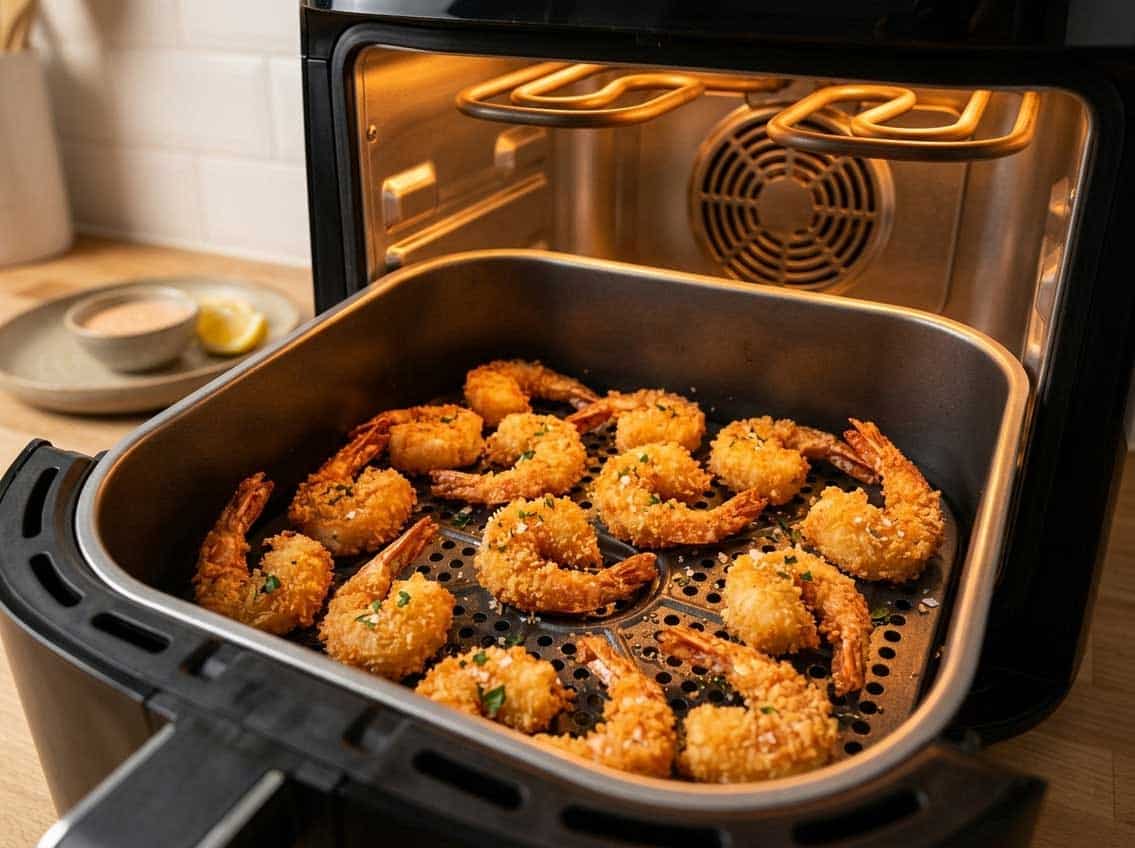
An air fryer can reheat your surplus shrimp very nicely, and it would have been my first choice if it weren’t for a few inconveniences.
For one, the basket on most models isn’t large enough to take a whole lot of shrimp, especially since you need to avoid overlapping as much as possible.
Plus, you don’t always have an air fryer on stand-by. For a lot of families, reheating their food in a pan on a stovetop is just a simpler option.
However, if you’ll only reheat a small portion of fried shrimp and care more about the crisp than the flavor, go for an air fryer!
The Steps
Here’s how to reheat fried shrimp in an air fryer:
- Set your air fryer to 400℉ for 3-4 minutes
- This step is optional, but you can brush the shrimp with oil to increase the crispiness
- Line the basket with punctured parchment paper if you’re concerned about crumbs going everywhere
- Lay your shrimp evenly in the basket
- Pause halfway to shake the basket and turn the shrimp around for an even cook
Reheating Fried Shrimp in an Oven
When you have a large amount of shrimp to reheat, and you don’t feel like using the microwave, the oven is your best bet.
Some people prefer covering the shrimp in foil before sticking it in the oven. Personally, I find that this is a quick road to soggy town.
Try this, instead:
If your fried shrimp is particularly greasy, it might be a better idea to lay it out on a broiler pan without foil. This way, any extra oil or grease will drain out of it.
One thing that scares people from reheating seafood in the oven is the scent.
However, if you heat vanilla water when you’re done, it’ll take care of any fishy odor.
The Steps
Here’s how you can reheat fried shrimp in the oven:
- Preheat your oven to 350℉
- Lay your shrimp in a broiler or a baking sheet with even spacing
- Place the tray in the oven
- Wait for 2-3 minutes and then turn off the oven
- Keep the shrimp inside for a couple more minutes before taking it out
Reheating Fried Shrimp in Microwave Ovens
For most of us, the appeal of microwaving leftover food is hardly irresistible because it’s fast and easy to use.
Here’s the catch, though:
A microwave can overcook your shrimp before you even know it. You also risk losing the rich texture.
Sure, you’ll have a hot plate full of extra shrimp very quickly, but it’s not going to be as good or as crispy as some of the other methods here.
However, if you’re in a rush and your main concern is getting a large amount of leftover food heated, then the microwave has got your back.
The Steps
Here’s how to reheat fried shrimp in microwave ovens:
- If your microwave has a preheat setting, turn it on for 5 minutes or so
- Get a flat plate and lay your shrimp with minimal overlapping to avoid sogginess
- Place the plate in the preheated microwave
- Set the timer for a minute or two, tops
- Check on the degree of cooking. In most cases, a minute is enough to heat a medium-sized plate of shrimp.
Reheating Fried Shrimp in Oil

At this point, maybe you’re contemplating deep-frying your previously cooked shrimp once again.
It was already fried in oil, after all. So, what’s the worst that could happen? Well, a bunch of things could go wrong.
For one, it could easily overheat and leave you with a rubber mess.
It can also absorb too much oil and get greasy and soggy. You can avoid this by heating the oil well.
However, if you know what you’re doing, it can be a quick method to reheat your shrimp and preserve the outer crisp.
The Steps
Here’s how you can deep fry your shrimp for the second time:
- In a deep pan, put your frying oil of choice
- Heat the oil on a medium flame while you get the shrimp ready
- Re-bread the shrimp if it loses its crust
- Test the oil temperature with the tail before dunking in the whole shrimp
- Remove the shrimp after a minute or two, tops
Ingredients that Go Well with Reheated Fried Shrimp
Sure, some people might enjoy their reheated shrimp as a stand-alone snack or maybe settle for some dipping sauce.
However, there are a lot of possibilities for leftover shrimp with simple ingredients that you probably already have in your kitchen.
Here are my top contenders:
Tortilla Wraps
Fixing yourself a tortilla shrimp wrap might save your meal. In the same oven, heat some tortillas alongside your shrimp tray.
Use other fillers like lettuce, peppers, spinach leaves, cilantro, and onion to improve the texture.
Plus, they add “freshness” that masks the old food feel.
Don’t forget to add a yummy breaded shrimp sauce to enhance the flavor. I recommend a mix of mayo and chili, but feel free to use your own mix.
To boost the whole meal, you can add a side of couscous salad and french fries. So simple, yet so efficient (and delicious!)
Rice or Noodles (Stir Fry)

I already told you that heating the shrimp in a bit of butter is my favorite option, and I’ll just go from there to making a full stir fry.
It’s so easy to mix some vegetables and leftover rice or noodles in the pan to get a full meal in under 10 minutes.
It’s the kind of lazy meal that still tastes good.
If you want to go the extra mile, cook some garlic butter noodles halfway and then mix them into the pan with the shrimp.
They’ll catch flavor from the shrimp while they cook to a finish. Top with a creamy sauce for extra flavor.
Do you want a final pro tip?
Use herbs and condiments. Something as simple as rosemary or a sprinkle of sesame seeds can tie the dish together.
Your Top Questions Answered
1. Why did my reheated shrimp turn out rubbery?
Rubbery shrimp is NOT what we’re after, and it usually means they got overheated.
I always pull shrimp the moment they hit 165°F internally and not a second later.
High, sustained heat causes the proteins to tighten fast, so a quick reheat at moderate temperature is your best move!
2. Why does the shrimp breading taste bland after reheating?
I’ve noticed that sealed containers trap steam overnight, softening the crust and muting the seasoning.
That under-seasoned, kind of weak flavor usually means the coating absorbed moisture before you even started reheating.
Pat the shrimp dry before reheating and you’ll get that crispier, more flavorful crust back!
3. Why is my breading coming off during reheating?
Typically, I’ll see this happen when shrimp are stacked or touching on the pan.
The coating sticks to neighboring pieces and tears right off when you move them.
I always space them in a single layer on a wire rack so air circulates underneath and the bottom doesn’t keep cooking!
4. Can I rescue shrimp that already turned soggy?
I’ve experimented with a quick two-minute blast in a dry skillet over medium-high heat, and it genuinely rescues the crust.
To bring it back, avoid adding any oil; the residual coating fat does the work.
Don’t give up on them yet!
6. Why does my shrimp smell different (strange) after reheating?
I strictly avoid reheating shrimp stored longer than three to four days, because a sour or ammonia-like smell after reheating means the shrimp were already past their prime.
That’s a clear sensory sign to discard them immediately.
Proper storage in a sealed container is everything here!
7. What’s the crispiest reheating method for a restaurant-style result?
My go-to method is the air fryer at 375°F for about four minutes.
I’ve noticed that the circulating hot air mimics the dry heat of a commercial fryer far better than an oven can.
The coating firms up without drying out the interior, giving you that satisfying crunch!
