
Pickled asparagus is one of those fancy-looking snacks that’s shockingly easy to make at home!
I pack my jars with garlic cloves, dill, and red pepper flakes to give them that classic deli-style flavor with a little kick.
You’ll want to use thicker spears because they hold up better in the brine and stay crisp instead of getting limp and sad.
They’re ready to eat in about a week!
Blanch the asparagus for just thirty seconds before pickling if you want them to keep that bright green color instead of turning olive drab!
How to Make Pickled Asparagus Recipe
Ingredients
- 1 lb Asparagus
- 1 cup White Vinegar (5% acidity)
- 1 cup Water
- 1 tbsp Pickling Salt
- 1 tsp Sugar
- 2 cloves Garlic
- 2 sprigs Fresh Dill
- 1 tsp Mustard Seed
Step-by-Step Instructions
Step 1:
Rinse the asparagus under cold water.
Trim off the woody ends so the spears fit upright in a wide-mouth quart jar.
Step 2:
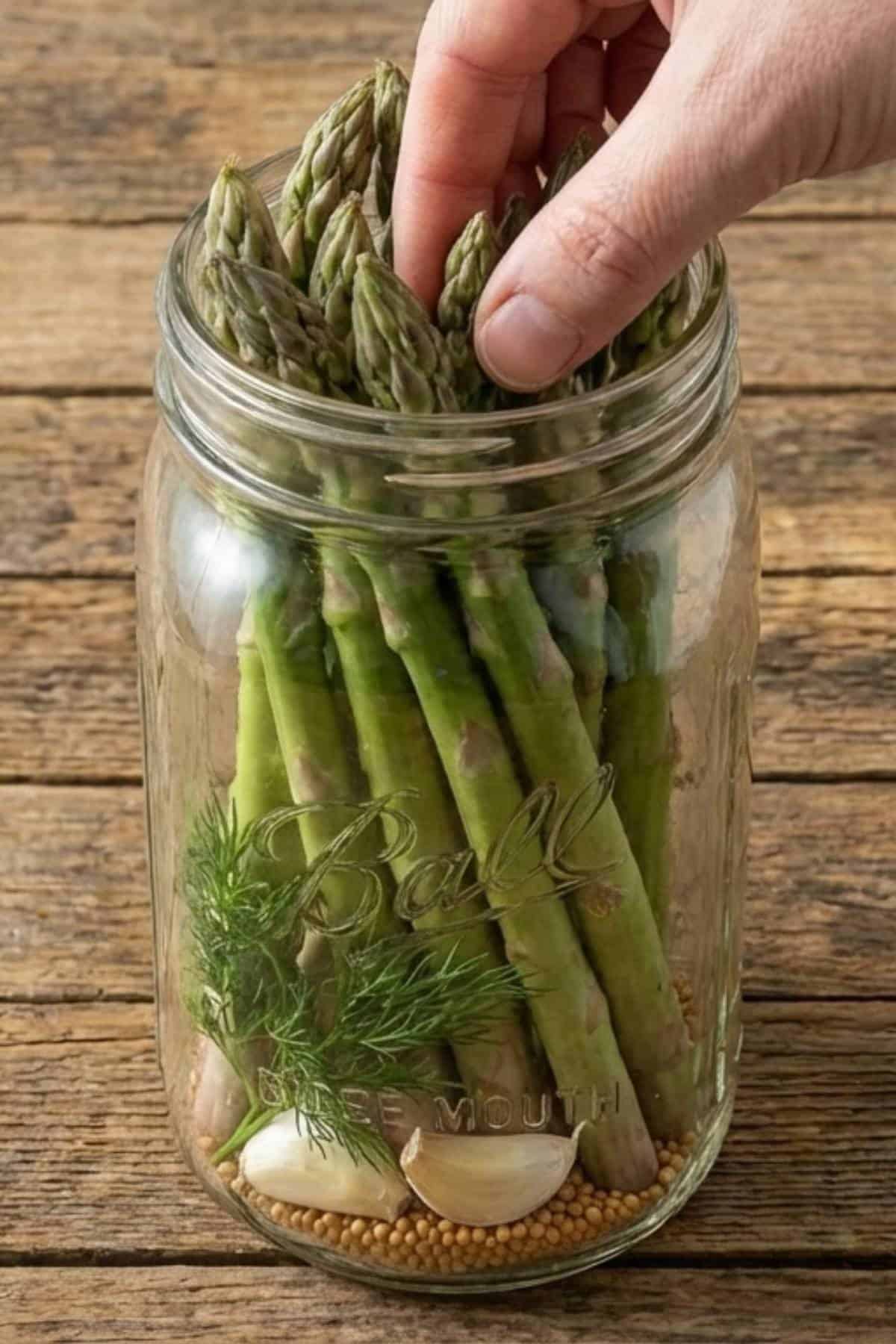
Drop the garlic, dill, and mustard seed into the bottom of the jar, then stand the asparagus spears up with their tips facing the top.
Pack them in as snug as you can.
Step 3:
Mix the vinegar, water, salt, and sugar in a small saucepan.
Heat gently until the salt dissolves and the liquid steams a bit.
Step 4:
Pour the hot brine over the asparagus, covering completely but leaving about 1/2 inch of space at the top.
Step 5:
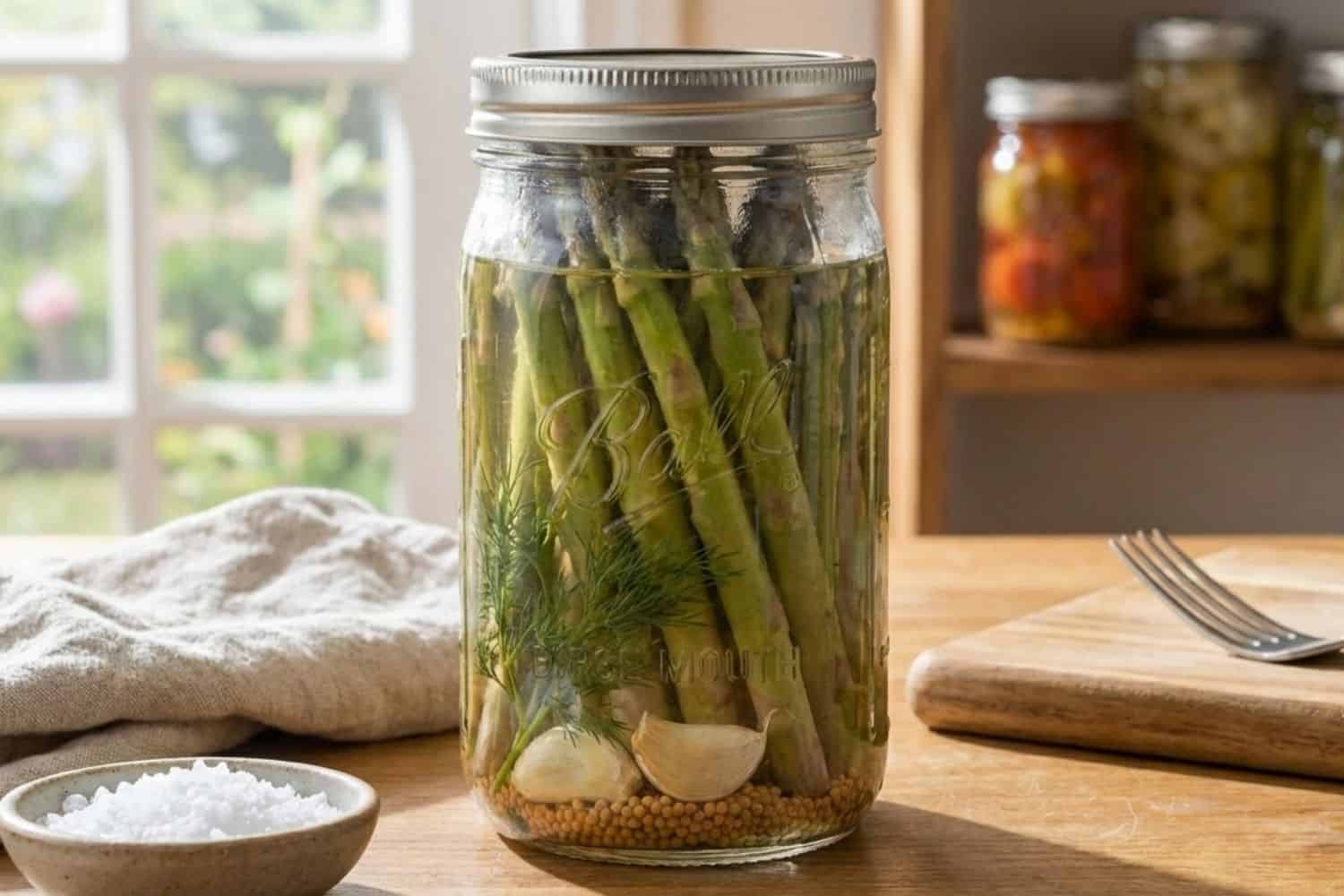
Seal the jar, let it cool for half an hour at room temp, then pop it into the fridge.
Step 6:
Let the asparagus chill in the fridge for at least two days.
The longer it sits, the more flavor and crunch you’ll get.
Tips and Tricks for Making This Recipe
Choose Fresh Asparagus
Honestly, go for firm, medium-thick asparagus.
Thin spears get mushy in the brine way too fast.
Pack the Jar Tightly
Pack those spears in! If they’re loose, you’ll get uneven pickling and floating bits that just don’t taste right.
Control the Vinegar Flavor
If you want a milder tang, swap out a quarter cup of vinegar for water.
It keeps things safe and still tastes great.
Wait Before Eating
I get it, it’s tempting to dig in early.
But give the asparagus at least two days so the brine really soaks in.
What to Serve with Pickled Asparagus Recipe
Charcuterie Boards
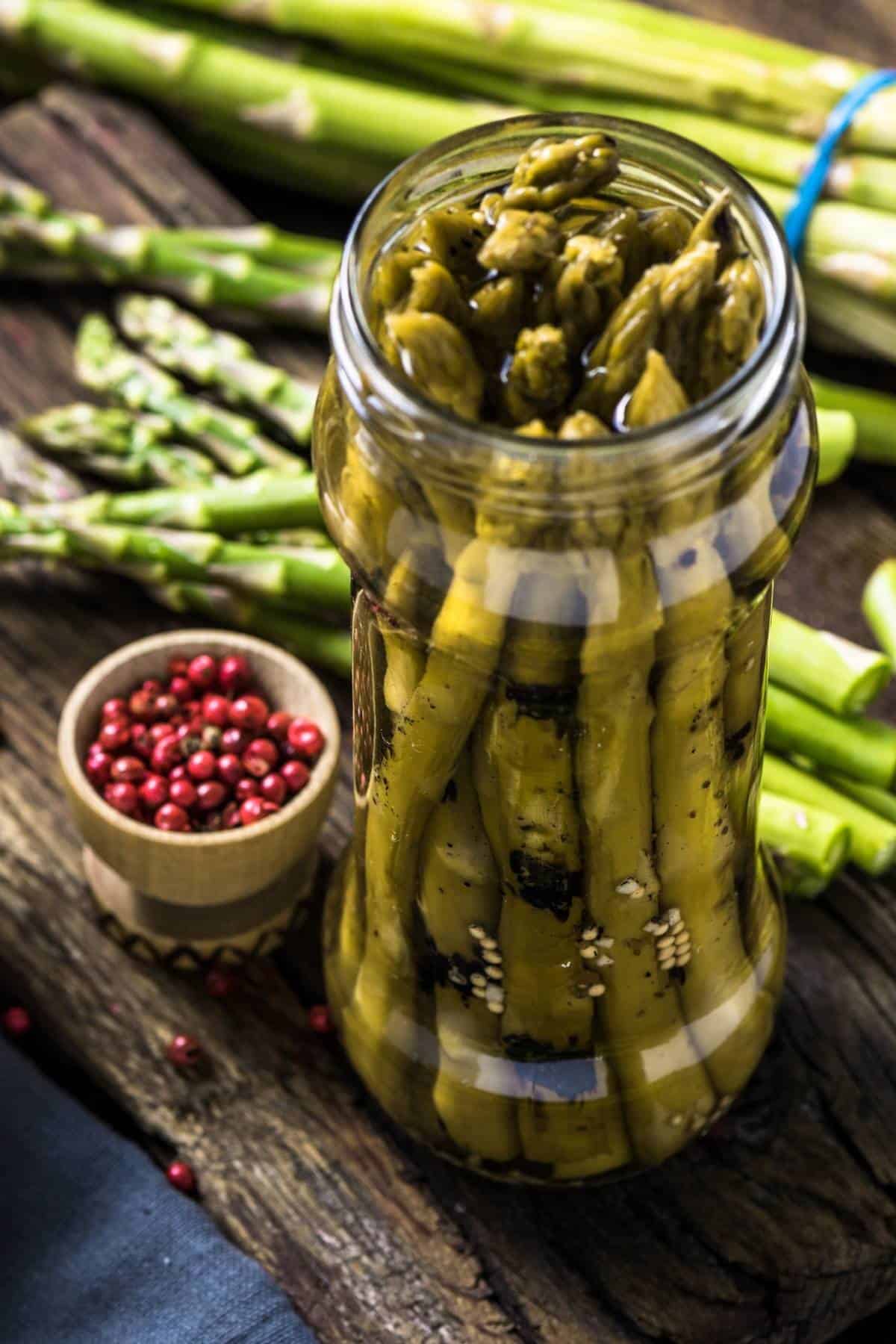
Pickled asparagus fits right in on a charcuterie board, balancing out the richness of meats and cheeses with its sharp bite.
I like to tuck the spears between salami, ham, and cheddar.
You’ll notice how quickly they cut through heavier flavors!
Grilled or Roasted Meats
Pickled asparagus goes naturally with grilled pork chops, sausages, or roasted chicken—especially on those hearty nights.
I usually serve it warm or at room temp for a nice contrast with smoky meats, and it never overpowers the plate.
Sandwiches and Burgers
Layer chopped pickled asparagus onto burgers or big sandwiches when you want crunch without extra weight.
I’ve tried it on beef burgers and turkey melts.
Honestly, it replaces standard pickles without missing a beat.
Potato and Egg Dishes
Surprisingly, sliced pickled asparagus works in potato salad or with deviled eggs at get-togethers.
I mix it in sparingly, and you get that tang without losing the creamy textures everyone loves.
Cocktails and Small Plates
Stick a whole spear in a Bloody Mary or vodka spritz.
It’s a fun garnish that feels a little extra.
I’ll also serve it with olives, roasted nuts, or tinned fish for a snack plate that’s easy but feels thoughtful.
Variations and Substitutions
Flavor Additions
Want more punch? Toss in extra garlic, dill stems, peppercorns, or chili flakes.
I do this a lot for a little extra kick.
If you like some heat, slice up a fresh jalapeño.
Take out the seeds for a milder burn; trust me, it makes a difference.
Vegetable Swaps
No asparagus? Pickle green beans or carrots instead; same process, just as tasty.
Cut thicker veggies thinner for even texture.
I learned that the hard way; uniform size really helps during chilling.
Brine Options
If you run out of pickle juice, just mix equal parts vinegar and water with salt, sugar, and your favorite spices.
I try to keep the flavor balanced.
Swap white vinegar for apple cider vinegar if you want a softer tang.
I’m a fan of adding mustard seed, too!
How to Store Leftover Pickled Asparagus Recipe
When you finish a batch, you’ll want to store it right so the flavor and crunch stick around!
Refrigerator Storage
For refrigerator pickles, keep the spears fully submerged in brine in a sealed glass jar. Always keep them cold.
Use clean utensils to grab spears.
It’s a small thing, but it helps your pickled asparagus last two or three weeks.
Shelf-Stable Jars
If you water-bath canned your jars, store them (without rings) in a cool, dark spot.
They’ll stay good up to a year.
Label jars with the date.
I do this so I remember to use up older jars first—no one likes wasting good pickles.
Signs to Watch
Check your jars before opening.
If you see cloudy brine, leaking lids, weird smells, or super soft asparagus, just toss it.
Trust your senses here; food safety matters, and it’s not worth taking chances with leftovers.
Common Mistakes to Avoid
Using Weak or Unbalanced Brine
If you skimp on vinegar or salt, you’ll get dull, mushy spears.
Careful measuring is worth it for reliable jars.
Stick with tested ratios and don’t switch up vinegar types randomly.
Acidity really affects texture and safety.
Skipping Proper Jar Preparation
Don’t skip cleaning and heating your jars.
Shortcuts can ruin a batch, and honestly, I’ve regretted it before.
Starting With Poor-Quality Asparagus
Pick firm, fresh spears; trust me, limp or old asparagus gets mushy way too quickly.
I’ll only pickle what I’d be happy to cook and eat right away!
Pickled Asparagus Recipe
Ingredients
- 1 lb Asparagus
- 1 cup White Vinegar 5% acidity
- 1 cup Water
- 1 tbsp Pickling Salt
- 1 tsp Sugar
- 2 cloves Garlic
- 2 sprigs Fresh Dill
- 1 tsp Mustard Seed
Instructions
- Rinse the asparagus under cold water.
- Trim off the woody ends so the spears fit upright in a wide-mouth quart jar.
- Drop the garlic, dill, and mustard seed into the bottom of the jar, then stand the asparagus spears up with their tips facing the top.
- Pack them in as snug as you can.
- Mix the vinegar, water, salt, and sugar in a small saucepan.
- Heat gently until the salt dissolves and the liquid steams a bit.
- Pour the hot brine over the asparagus, covering completely but leaving about 1/2 inch of space at the top.
- Seal the jar, let it cool for half an hour at room temp, then pop it into the fridge.
- Let the asparagus chill in the fridge for at least two days.
- The longer it sits, the more flavor and crunch you'll get.